Open-source skills for Claude Code
Install all 5 skills. One command.
Grab Enhance, Fortress, Slopcheck, Snapshot, and Summary in one line. CrawlSpace, ClawdNotch, and ClawdHooks are standalone tools with their own installers — see their cards below.
$ npx claudesuite install-allMost pentest vendors sell you a PDF and tell you to trust it.
Audit the auditor — every persona we deploy is public on GitHub.
Fortress
446 attack personas. 25 squads. 9 phases. Every finding requires proof-of-exploit. Agentic findings additionally get an estimated AIVSS score (OWASP v0.1 draft) on top of CVSS 4.0 — quantifying how much agentic behavior escalates baseline severity. Mapped to CWE, CVSS 4.0, AIVSS, OWASP (Web/LLM/Agentic), NIST 800-53 + SSDF, DISA STIG, EU AI Act, and MITRE ATT&CK/ATLAS. Every persona prompt is open source — audit the auditor.
Slopcheck
Catches AI-generated code that compiles but doesn't actually work. 7-phase audit with a 158-item master checklist and a 25-pattern AI-slop smell catalog. Every finding requires file:line evidence. Propose-and-approve — never auto-fixes. Sibling to /fortress — correctness precedes security.
Summary
Every Claude Code session you run disappears the moment you close the window — unless Summary captures it. One command snapshots the whole session into a wikilinked Obsidian note: decisions, architecture changes, concept notes, mermaid diagrams, git forensics. Your knowledge graph compounds instead of resetting every morning.
CrawlSpace
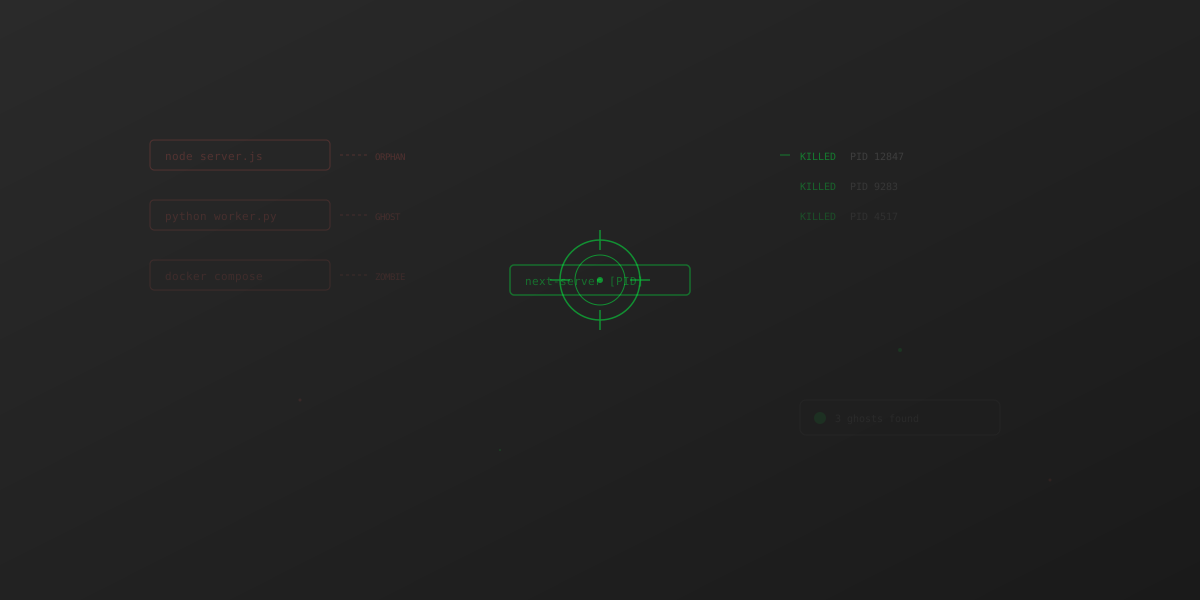
Claude Code spins up dev servers to test features. Claude Code is terrible at closing them. Hours later your laptop is running hot and you have no idea why. CrawlSpace sits in your system tray and hunts down every orphaned dev process Claude, Cursor, and Codex leave behind — 90+ dev tool patterns tracked. A parent-chain walk confirms true ghosts (parent dead = safe to kill) before you nuke them. One click per ghost, one shortcut for all. 36 MB standalone .exe.
ClawdHooks
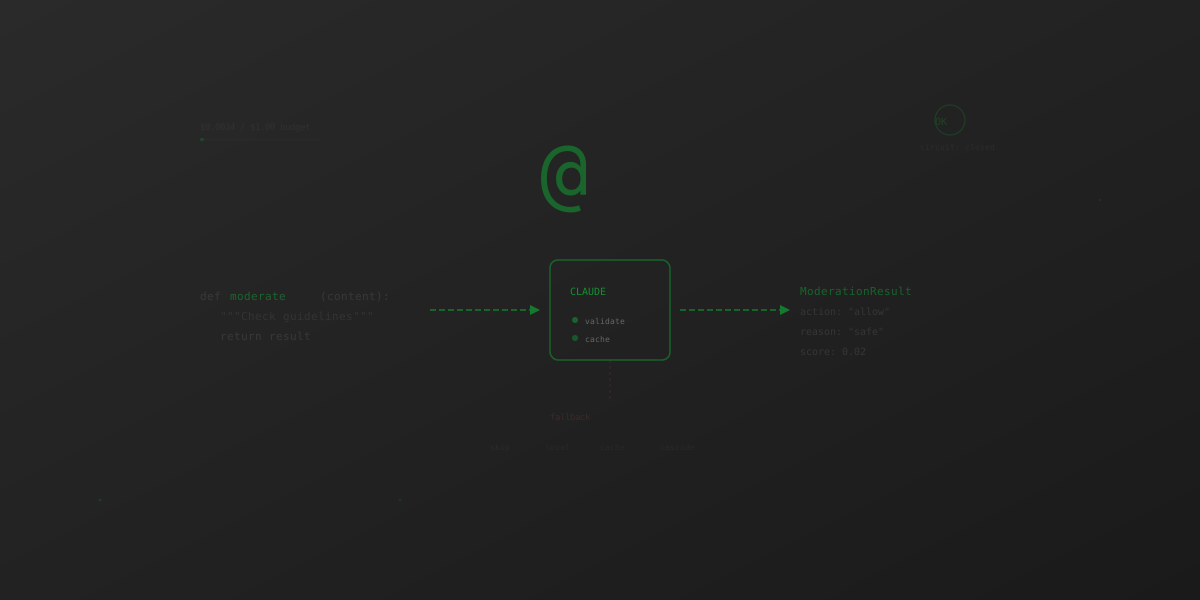
Stop writing boilerplate to call Claude from your Python app. Decorate any function with @router.hook() — your docstring becomes the system prompt, your type hints become the validated output, and Claude runs the logic. Pydantic in, Pydantic out. Circuit breakers, cost caps, response caching, PII filtering, and OpenTelemetry all included. The middleware layer that was missing between raw API calls and heavyweight agent frameworks like LangChain.
ClawdNotch
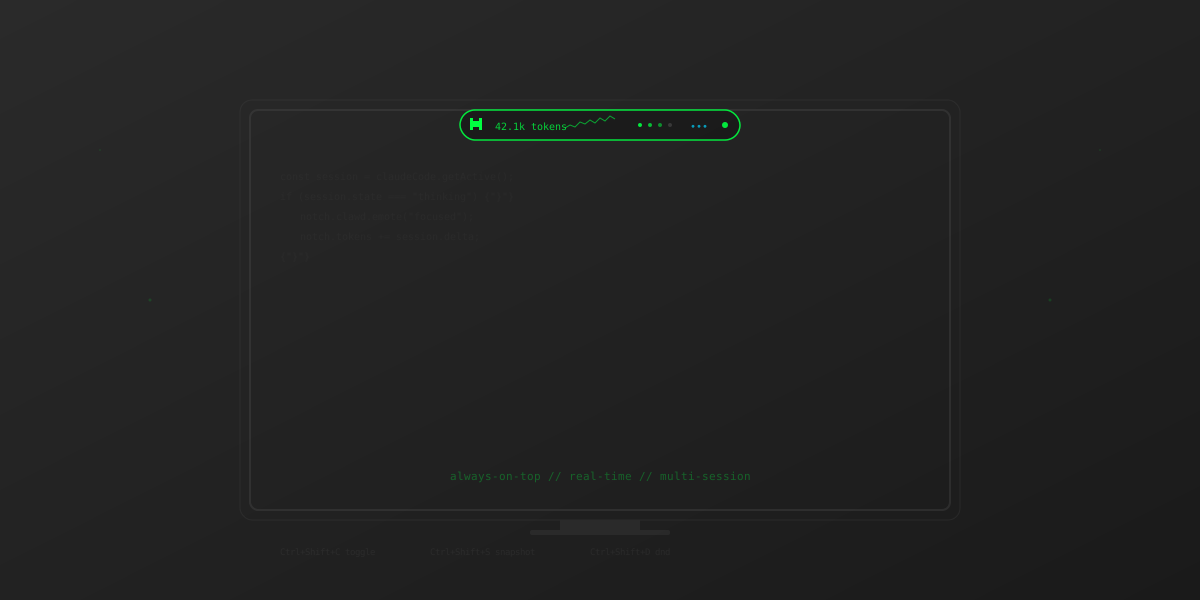
Claude Code sessions run in the background and you lose track of what's happening. ClawdNotch pins to any edge of your screen — top, bottom, left, right — and surfaces every active session in real-time: tokens, tool calls, CPU, git state, streaks — alongside Clawd, a pixel mascot with an emotion engine who reacts to Claude's activity (thinks, bounces, celebrates). Multiple sessions tracked side-by-side. Windows finally has a notch app that's actually useful. 43 MB standalone .exe, always on top, zero setup.
Snapshot
Every Claude Code session writes an away_summary when it dies — but it's buried in JSONL files no human reads. Snapshot surfaces those breadcrumbs, enriches them with git state and active TODOs, and drops a one-paragraph markdown file at ~/.claude/snapshots/<project>/latest.md every time a session ends or is about to compact. claudesuite snapshots shows every project's last breadcrumb in one table. claudesuite resume <project> prints the exact resume command. The morning recovery UX you wish Claude Code shipped with.